

 Download PDF
What is the ‘Liquitex White Walls’ project?
Liquitex white walls is a great example of how TFAC directs traffic to brand. Each year we create a white walls project either through funded partnerships or through open submissions to engage with leading art schools, as we saw in the fantastic outcome in Spain last month.
The Slade School of Art project – 2019
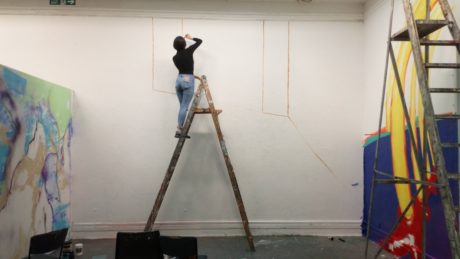
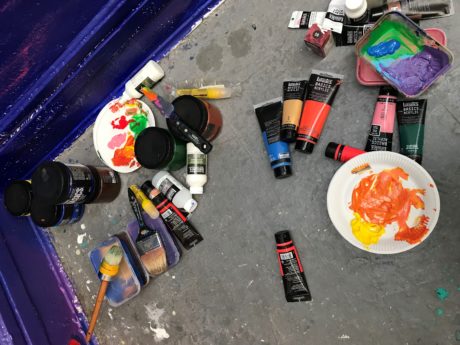
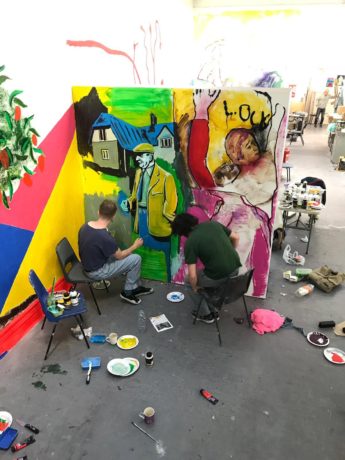
This month at the Slade school of art, we provided an opportunity for students to inhabit a space by repurposing Liquitex basisc stock. It was a great chance to see the potential in our basics range and a perfect segway for students into the Liquitex brand.
How did the project go this year?
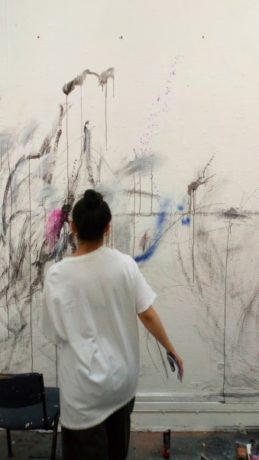
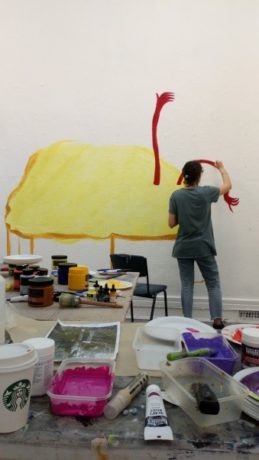
It performed beautifully in this context with extensive coverage and saturation of colour. The students did it justice and it really seeded the brand both in the quality of the materials employed, but also in recognising the incredible opportunity they were given.
The responses by the students reflected the importance of being able to have a platform to experiment with making site specific work. Students from last year’s White Walls openly acknowledged in this year’s graduate show how the chance to experiment with scale and materials gave them the confidence to make the work they were showing and how important it was to curate the space they were exhibiting.
Students’ testimonials:
“I just wanted to let you know how fantastic the whitewall project was for me. I hadn’t worked on such a big scale before and it just freed me up, it made me think about the materiality of paint more as opposed to getting too caught up in making an image and I therefore felt like I was enjoying the act of painting more. The idea of working on a wall and knowing that the work was going to be erased at the end, allowed for this sense of freedom and irreverence to come in which opened up a lot of possibilities in the work.
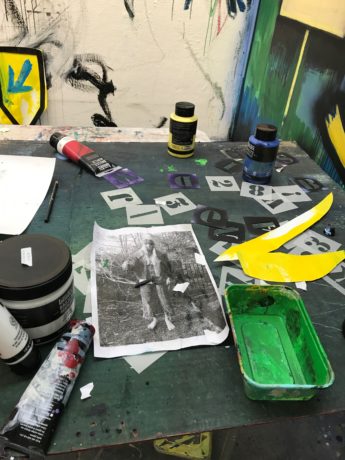
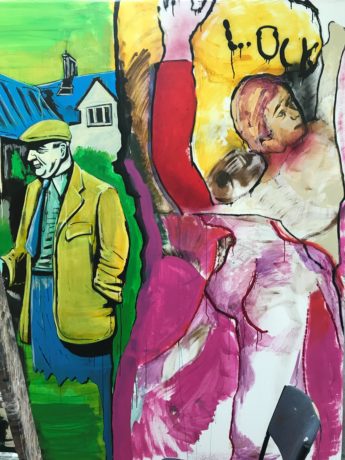
The main ideas for me with this project was to leave the image till last, and also to use collage and paint together by either continuing the space depicted in the cut out image by using paint or vice versa. I loved bonding with everyone during the project. It was truly magical and I’m excited for whoever will be doing it next year. Thank you!” Will Narby
You were able to work on an unprecedented scale covering a large wall in the vicinity of the campus as part of your masters – what does this opportunity mean to you?
“The White Walls Project was so much fun. It allowed for play on a massive scale, exploring space, colour and composition in relation to people in space. This is going to be totally invaluable in my work going forward as I am intending to investigate how being immersed in different spaces and compositions effects the viewer’s experience of painting. Participation in this exciting project has paved the way for experiments with queering spacial perspective and ambitious new projects.”
Can you say a bit about the project – what have you done on this wall? What techniques have you used, your ideas behind the piece? And what materials did you choose for it?
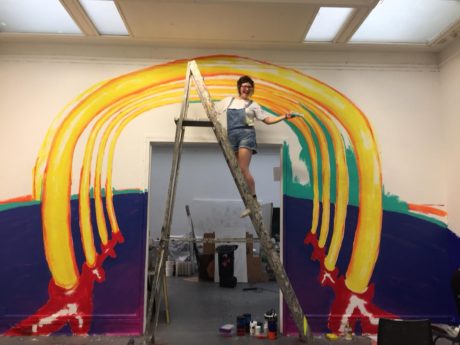
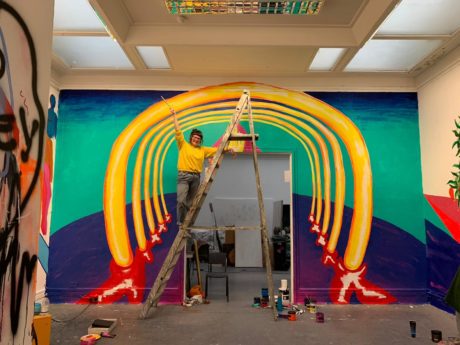
“I had been playing with a boot tunnel composition both on small scale painted and drawn works on paper and canvas, but also in slightly larger sculptural pieces. The white walls project allowed me to up the scale and directly link my two dimensional boot tunnel with the architectural qualities of the room. I painted a series of large yellow legs wearing big red boots and forming archways across the studio doorway. It was really fun to use the natural texture of the wall to inform the use of paint. The scale also allowed me to appreciate a freer style of painting, with throw away gestures. I went for vibrant bold blocks of acrylic colour and used some metallic bronze to add a bit of ritual to the feel of the piece. “
“It was such a great opportunity for me to study on such a large scale space. I could see how my work would actually be expressed out of paper and canvas. I also found out that I, who always drew a fixed size drawing, did not have to set a size limit…Facing a wall bigger than my body, I was free from the idea of painting a particular form. I was able to draw more freely. Thank you.” Hee Jyung Kim
“Working on this scale and with these materials has changed the way I work, I now realise how important scale is and it has given me the confidence to work towards larger pieces as I complete my MA. Thank you it was such fantastic opportunity” Louis Bennett