


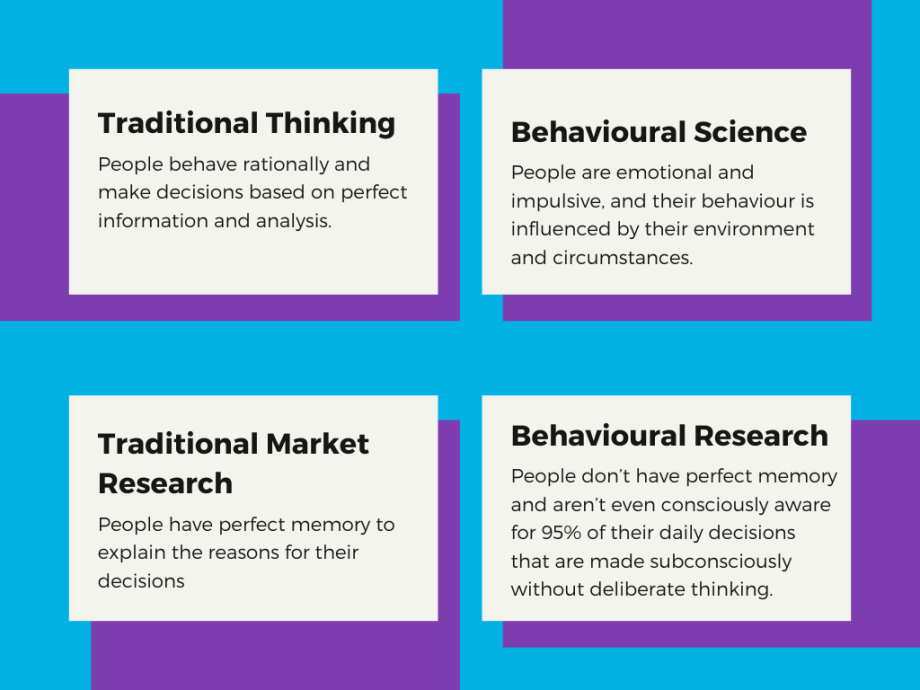
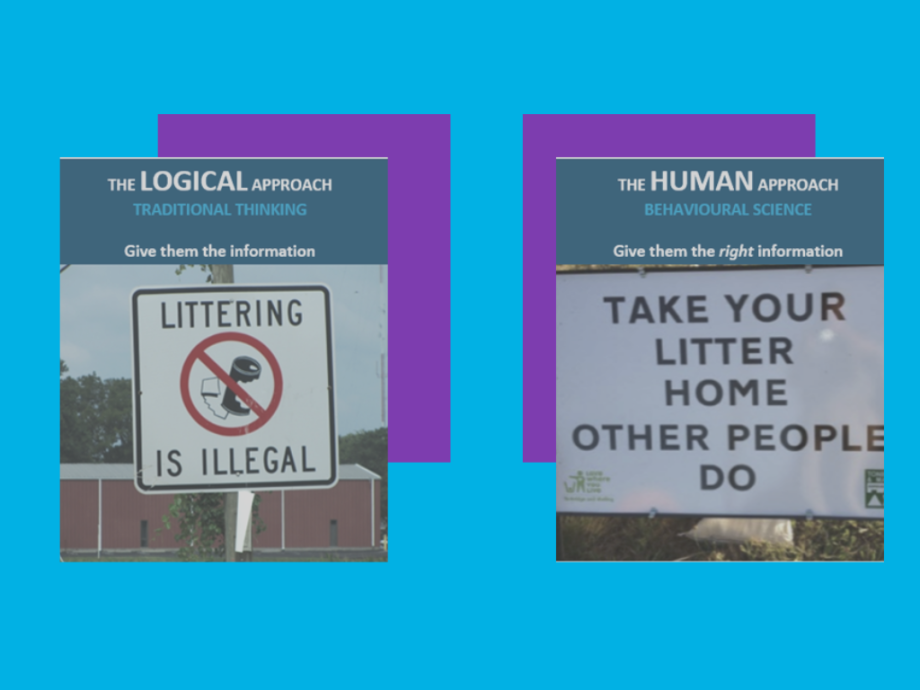
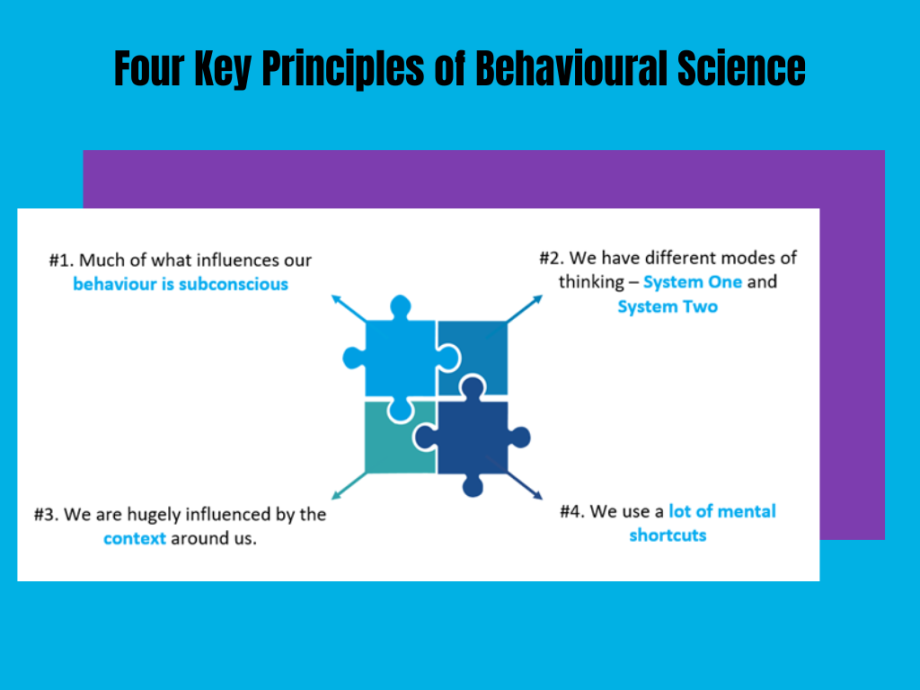

1. Much of what influences our behaviour is subconscious
People don’t always know or can't articulate what influences their behaviour. “The estimate from neuroscientists is that our five senses take in 11 million pieces of information every second. And how many of those do we process consciously? A mere 40!”
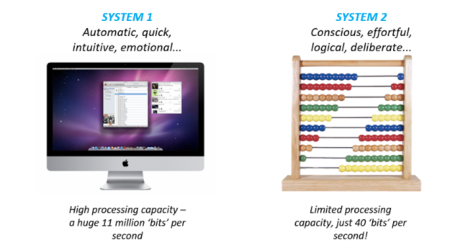
2. We have different modes of thinking: System 1 & System 2
System 1 is our automatic, intuitive, and emotional response to situations; System 2 requires effort and conscious thought. When information is presented in a way that requires minimal cognitive effort it helps us make quick and easy decisions using our “System 1” intuitive thinking.

3. We are hugely influenced by the context around us
How we think and behave in one situation and environment isn’t necessarily how we think and behave in another.

4. We use a lot of mental shortcuts in our decision making
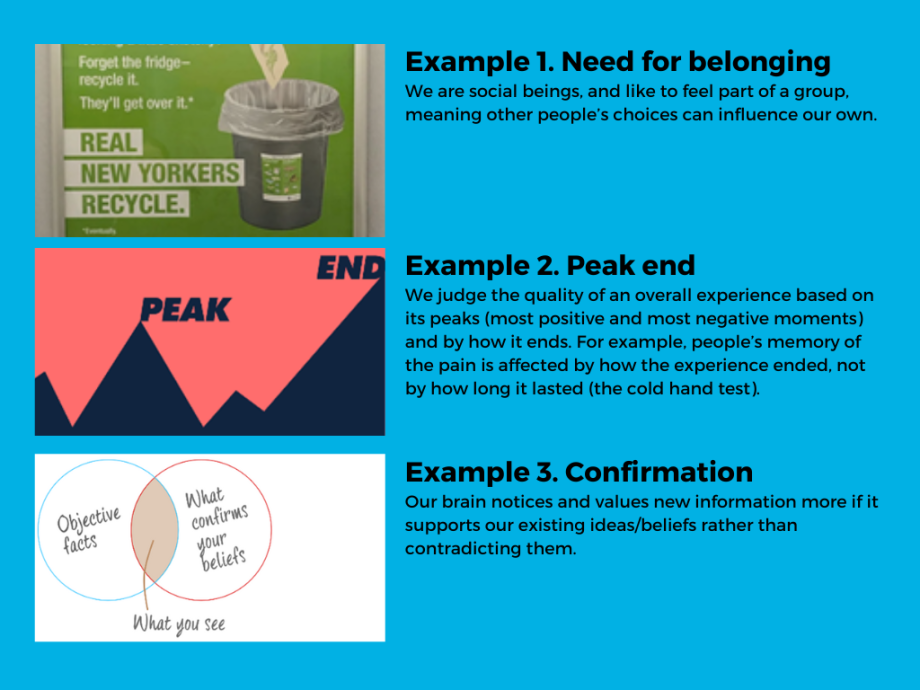
We are not fully rational beings; we use numerous mental shortcuts to make our decisions faster.
The image below provides a few examples:
Reading List
If you are interested in more biases examples or if you want to expand your general knowledge on Behavioural Science, we have prepared this reading list for you.
Comprehensive list of biases
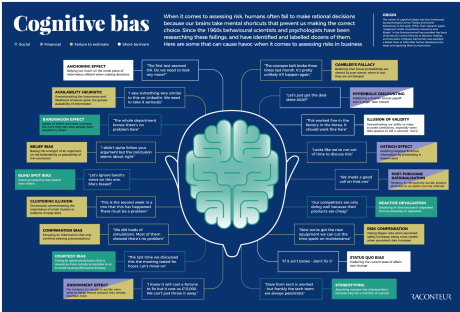
For a high resolution version of this image, please click here.
Books list
- “Thinking, Fast and Slow” by Daniel Kahneman
- “Nudge” by Richard H. Thaler and Cass R. Sunstein
- “Predictably Irrational” by Daniel Ariely
- “Scarcity” by Eldar Shafir and Sendhil Mullainathan
- “Influence” by Robert B. Cialdini
Are you curious to learn more? Leave your comments, thoughts or feedback in the comments box below and/or get in touch with the Insights Team:
- Jatin Kuckreja jatin.kuckreja@colart.com
- Melissa Nassimiha melissa.nassimiha@colart.com
A really interesting article, thank you! This is so relevant to all aspects of our lives (personal and work related) beyond our deep dive into artists. I’d love to explore this more with you and will be in touch 🙂
Almost too big a subject to comment on but very glad to see this thinking now within our business. Understanding the ‘ why’ in what people do is fundamental to us getting noticed. Thanks to Jatin, Stuart and teams for being brave enough to try new ways of doing the old things and stretching our minds. 🙂
Well done Jatin and team for taking a ‘behavioural science’ approach to research to get a better idea of the REAL (subconscious) reasons behind artists choices and buying behaviour.
Applying these biases into our Comms (across all touchpoints) will help grab attention and influence behaviours.
As proven in a really ‘practical’ book on applying these behavioural science learnings to grow brands & sales…
‘DECODED: The Science behind why we buy’.
In the book there are many instore tests where changes in messaging resulted in a surprising sales uplift. Worth adding to the reading list 😉
Great opening explanation and love the visuals to help with processing!
Thanks to all of you who have viewed the content here and engaged with it thus far. Any feedback (positive or constructive) is welcome as we begin to use real world behaviour through the lens of Behavioral Science to ground a lot of our insights and recommendations in moving forwards. More to come!
Please, no more book recommendations, I can’t keep up!
I need to take a sabbatical from Colart to catch up on my reading… and this is such an interesting topic!
One thing I will add from my own personal perspective is that while it is super interesting to learn about ‘what makes people tick’, all that knowledge can also be utilized inwards… to get to know ourselves. Who am I and why am I here? I believe that the knowledge (eg. systems like the above and deeper knowledge from the book recommendations) should ideally be paired with the experience (putting things in practice) to really learn.
In that respect, it is great to see this knowledge now being applied to our insights and brand comms, but my take away is: how does this relate to me. How do I make this relevant for my life/work/social interactions. If anyone has any thoughts/suggestions… I’d be happy to hear.
I have always been interested in this topic and actually read this as quite general. Still appreciate it though and love the infographic with the brain on biases. Can’t wait for the outcome on the research to artists as I am one myself 😉
Great to be having these conversations and I would really recommend John Berger to the reading list, particularly Ways of Seeing, an old text but still very relevant. Looking at art is key