


The sun has definitely shone with great ferocity this year and keeping the garden alive takes a lot of time whilst using a lot of water. With a hose pipe ban in our area looming I’ve automated the watering of our garden to reduce our water usage and take away the daily toil.
Typically watering the garden takes around an hour with a hose which equates to around 1,000 litres of water. That is a lot of water, equivalent to around 13 baths or 28 shows or 1759 pints of beer (should you fancy the challenge). As we are on a water meter that amounts of £1.91 per day in cost or £119 across the summer months and 36kg of CO2 emissions.
The trouble with watering with a hose (or worse still a sprinkler) is that it is incredibly inefficient as it tends to wet the body of the plant with only a small percentage reaching the roots where it is actually needed. Most of the water that hits the leaves tends to evaporate off and can often cause mildew to form on the plant. You also end up wetting areas of soil away from the base of the plants which provides little benefit. As a result of this unless you are tremendously targeted with your hose action, around 75% of the water that leaves the hose effectively goes to waste.
The solution I have gone with is to lay porous soaker hoses across all the beds, carefully laying them so that they directly deposit water onto the plants root systems. You only need to cover 50% of a plants roots for them to be effective. Soaker hoses are very efficient as water is directly dripped onto the soil surface and can quickly soak away meaning that you need to use a lot less water.
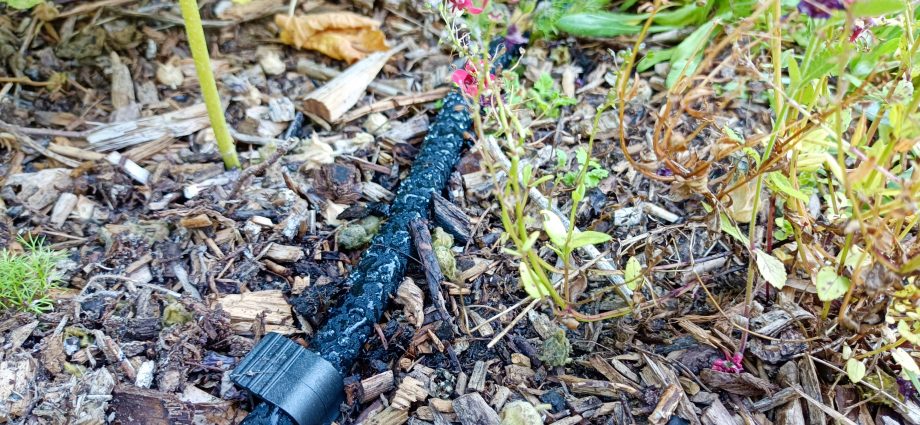
Soaker hoses slowly drip water onto the surface. By running them close to plants you water only the areas which need it.
The soaker hose connects back to a regular hose that goes back to an electronic timer and pressure reducer on our garden tap. This ensures the system is only on for the minimum amount of time required to water the garden (typically 15-20 minutes). We have programmed it to come on late at night to minimize evaporation losses.
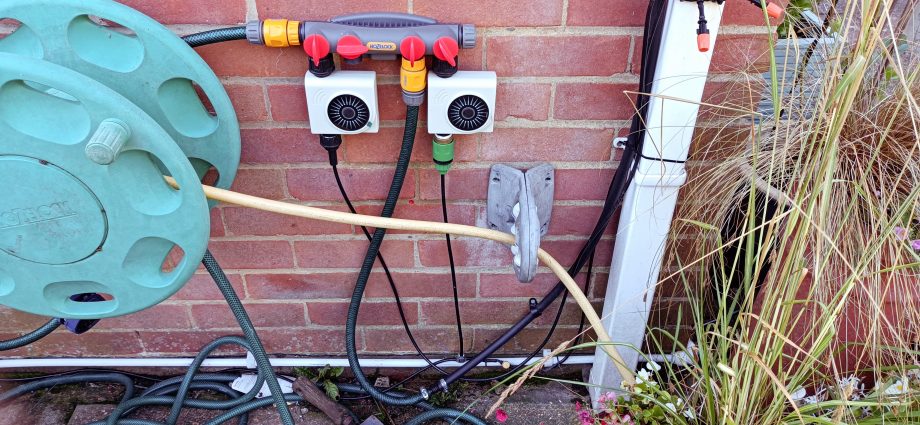
Timer units turn the watering system on at set times of the day. They also can look at weather reports to understand if watering is necessary or not.
As a final step in locking the water into the soil we have a layer of mulch on top of the soil that keeps the weeds down whilst locking in the moisture. We used a hard wood mulch (tree surgeons often have a ready supply if you need some) as soft wood tends to soak up water reducing the impact of your watering. Currently our hoses are on the surface but when we re-mulch this winter we will bury the hoses in the mulch to further reduce any evaporation loss. (Note you should never bury the hose in the soil as it will stop working)
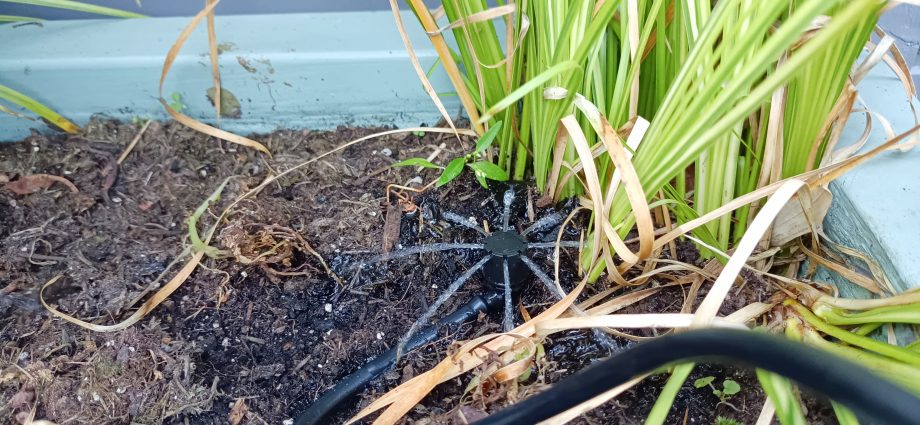
In pots and containers the micro irrigation system waters individual plants
For our pot plants we use a micro-irrigation system which consists of small 6mm pipes and small drippers that water individual plants. As with the soaker hose this comes on via a timer to ensure minimal water usage.
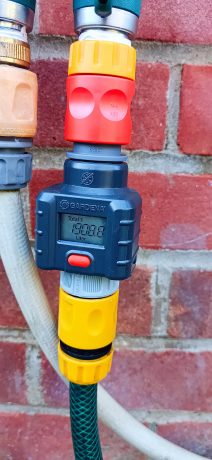
To measure our water usage we have installed a Hozelock water meter.
As a result of this change we save around 60% of our water usage saving u to 37,000 litres of water over a hot summers like the one we are experiencing.
Cost wise:
- the soaker hose was £75 per 100m of hose
- the micro irrigation system around £25
- timer was £28.
- water meter (optional) was £30
This means it will have fully paid itself off within 2 years.
Setting up took around 3 hours in total and after a little planning into where to place the hose, was very simple to do.
The final great thing with the watering system is that due to their efficiency, most water suppliers allow them to be used during a hosepipe ban as long as they are operated by a timer and a pressure reducer is fitted.
Nice post Toby.
Sometimes it can be even simpler: collect the rainwater that normally goes through the drain into the sewer and use it to water your garden.
Rainwater is better for your garden anyway than water that is made for drinking.
It is not only simple to make, but also effective: as a test I did this during the rain shower last week and I collected 200 liters of rainwater.
Of course you need a container. But you can also create a simple pond in your garden.
A pond of 200 x 100 x 50 cm simply collects 1,000 liters. Or you spend $80 for a 400 liter tank.
I’ve been looking at IBC tanks which are the large 1,000l tanks used at factories all around the world for delivering liquid materials. If you can find one thats been used for something relatively harmless (lots are used for transporting concentrated fruit juice), they make excellent water storage solutions. The problem is you need a lot to cover one seasons worth of watering if there isn’t much rain and so you garden can quickly become more storage tank than garden.
An alternative I’ve started work on is a grey water systems, diverting all the water from our bath/shower into a tank but the downside is you can’t store this ‘greywater’ as it tends to pong after a day or so due to all the bacteria you wash off you body starting to multiply. Originally I was worried what effect shampoo/soap would have on the plants but apparently they will not worry if applied direct to their roots and all those flakes of skin that wash off our body are pretty good plant chow
Sure, it’s depending on the size of the garden. But as well the expectations-management: if you want a garden loaded with botanic flowers and grass which his Phthalo Green Yellow Shade, you need a lot of water. But if start early enough with collecting, it might work. And grass will always recover anyway, even if the colour is Naples Yellow Deep sometime.
And you need to secure the summer-season volume in 1 go. Even during a hot summer, it sometimes rains.Depending on the garden size, a 300 liter container will do. Plants need less water than we might think. They will grow their roots deeper in the soil to get what they need. Don’t make them lazy..
Grey water is another great initiative, certainly if you combine it with plastic-free soap/shampoo etc. Grey water needs however a more complicated infrastructure to collect.
Love the paint colour references. Very good 🙂
Really interesting Toby, what a great post! As to Piet’s point above, growing up we had a couple of water butts (very cheap to buy) and always used these for watering the garden before turning the hose on. During this particularly hot and dry period in the UK I’ve got a lot better at reusing water (from flower vases once the flowers have died, from Monty’s many water bowl refreshes that he demands during the day, etc, etc!) and keeping the tap turned off. Many of these things are easy habits once you get into the swing of doing them.
Totally agree Karin.
As Ajita educated us, sustainability starts with Reduce. Having 2 young adults in the house, we challenged them by putting a bowl in the sink. So they can notice how much high quality drinking water they spoil by quick hand washing and washing vegetables. As you mentioned: all easy. But mind set changes are required.
This was so interesting! I actually don’t have a hose and use a watering can for the tomato plants but I’m going to share this with my dad as I know he’ll be very interested!
Similar to Karen, I use my fussy cat’s leftover water bowl contents to water the indoor plants, at least they don’t turn their nose up at it!
Yep, it all comes down to how much you have to water. My wife Claire is a very keen gardener so we have a lot of plants to water and so its impossible to cover it all from water butts and water re-use. I have tried to persuade her that my horticultural favourites, cacti are the way to go but having witnessed all the hideous injuries they have inflicted on my hands she isn’t massively keen
great post Toby – we installed a similar watering system in our garden before the hot weather and for just 10 minutes a night we absolutely saved our garden!
Will definitely follow up on some of the other advice especially Piet’s advice to get my sons to put a bowl in the sink – their use of water is outrageous!!
Great post Toby. Really important topic.
Just writing the article seems to have solved the problem as we’ve had loads of rain here since I dared to say the word “drought”