Health & Safety at Colart
Our Commitment
Colart firmly believes that excellence in health and safety (H&S) management is integral to its overall business strategy, as a strong H&S record correlates with high productivity and quality standards. Recognising the health and safety of its employees as a critical management function, Colart acknowledges that successful H&S performance is synonymous with overall business success.
Economic Considerations
Economically, Colart upholds that prevention is not only more cost-effective but also aligns humanitarian and commercial considerations, asserting that profits and safety complement, rather than compete with, each other.
Valuing Our People
With people being our most valuable asset, Colart is unwaveringly committed to ensuring the health, safety, and welfare of all individuals associated with its activities.
Ongoing Monitoring & Legal Compliance
This commitment extends to ongoing monitoring and review processes to achieve continuous H&S improvements. Legally, Colart is dedicated to full compliance with H&S legislation and aims to exceed regulatory requirements wherever practicable.
Collaborative Efforts
A positive H&S environment will be fostered through collaborative efforts at all levels of Colart and the Chief Executive Officer will ensure competent persons are appointed to manage the required and appropriate arrangements at each Colart facility.
Our Policy
It is essential for everyone to be aligned with the same health and safety rules and approach. To ensure this, we have updated the Health & Safety (H&S) policy to reflect our new organisational aims and direction.
Please take the time to read and understand it, as the policy also emphasises why each of us is crucial to the success of this strategy.
Our Strategy
Our Health & Safety strategy at Colart is designed to create a safe and secure work environment by focusing on key areas that ensure proactive safety management.
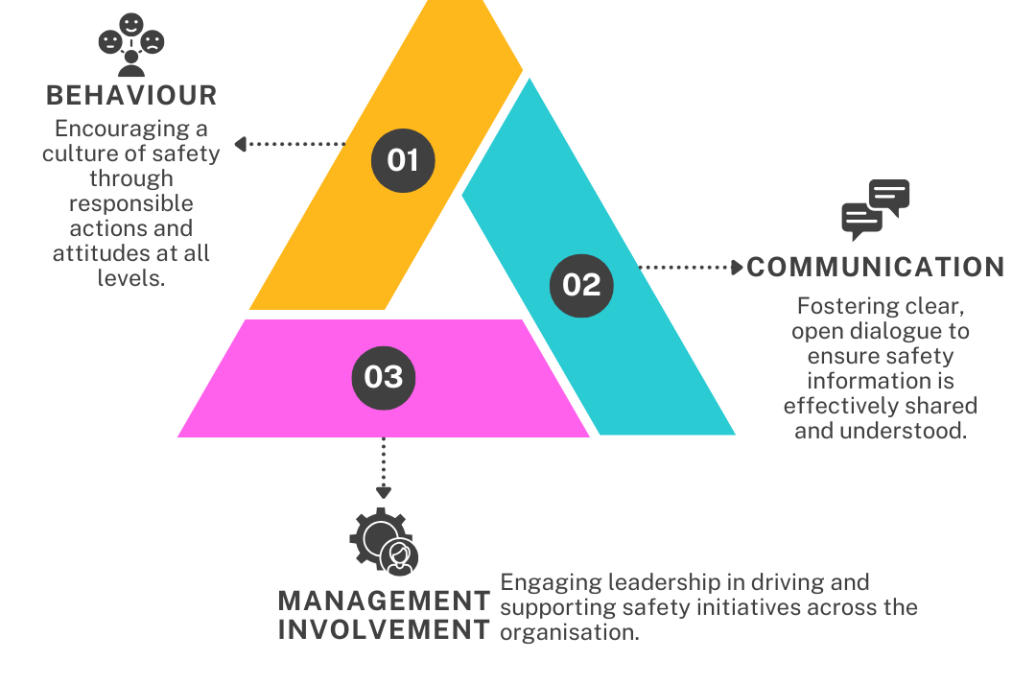
Our objective is to have 0 accidents in Colart. To achieve this result, we have defined a strategy based on 3 pillars:
- Behaviour
- Communication
- Management involvement
We want to involve our management at all levels to promote and communicate regularly about safety in order to change everyone’s behaviour.
The perception of safety in Colart is based on 4 levels:
โ๏ธ1 - Safety is respected within the context of the LAW, the minimum is done to comply with regulations
๐2 - Safety is driven by the RULES defined by Colart; failure to comply with them risks disciplinary action.
๐จ3 - Safety is a PRIORITY for Colart, and everything is done to guarantee the health of the employees. The company provides me with the equipment and facilities that allow me to guarantee my own safety
๐ง 4 - Safety is a MINDSET. Beyond what the company puts in place to guarantee my safety; I am also an actor in my own safety and my colleague’s one. I adapt my behavior not to get injured, in the company but also in my daily life.
Health & Safety KPI's
In this section, we will regularly update the key metrics and visual insights into our safety performance, helping us monitor progress and ensure continuous improvement.
KPIs Last Updated: 2/06/2025
Safety Pyramid
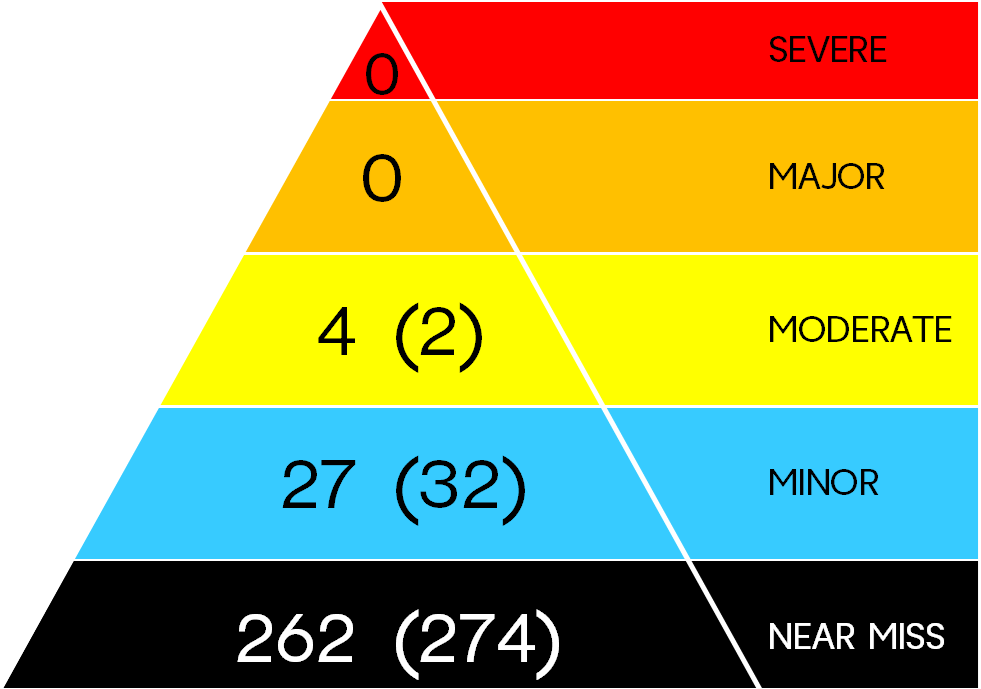
The purpose of the safety pyramid is to visually highlight that the most serious accidents are the rarest, while near-miss or risky situations are the most frequent. The more aware we are of the unsafe situations around us, the fewer accidents we will have.
Definitions for Each Level:
- Severe: Fatality
- Major: injury or illness resulting in permanent impairment
- Moderate: injury or illness requiring an external treatment with more than 1 day off work
- Minor: injury or illness resulting in first aid treatment which can be provided on site. Less than 1 day off work.
- Near miss: An unplanned event, or an identified situation, that did not result in injury but had the potential to do so.
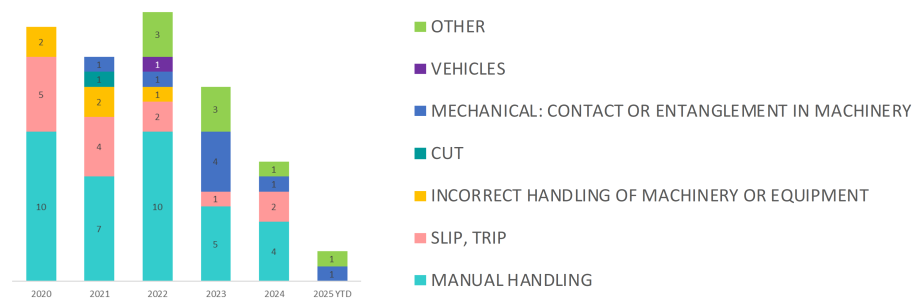
Classification of Moderate Accidents
If we want to be sure of having the right response in the event of each moderate accident, we need to be able to identify the type of accident we are facing. We can see that manual handling is a recurrent and serious cause of moderate accidents.
This can be explained by the fact that our activities in warehouses and factories are heavily impacted by manual handling. With this in mind, we reinforce training and invest in reducing manual handling as much as possible, while also reducing the weight of the items our people have to handle.
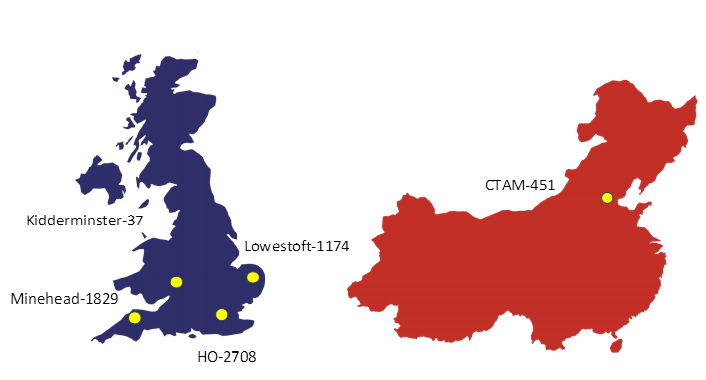
Safe Days in UK & CTAM
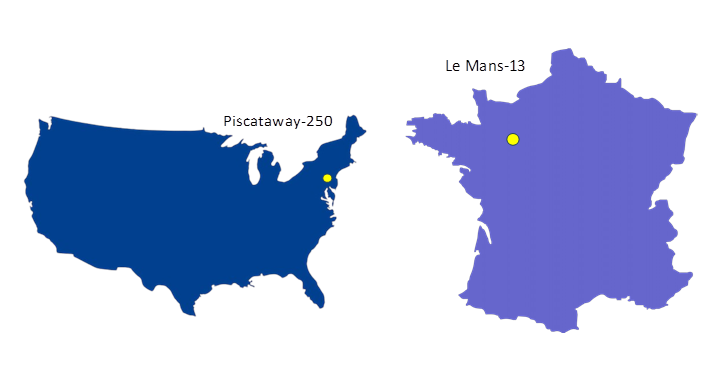
Safe Days in US & Le Mans
Safe Days
Do you remember when the last moderate accident occurred? If not, that's good news, and it’s more beneficial for us to count how many days have passed since the last accident while we’ve been in a safe place. Every additional day without a moderate accident will increase the count.
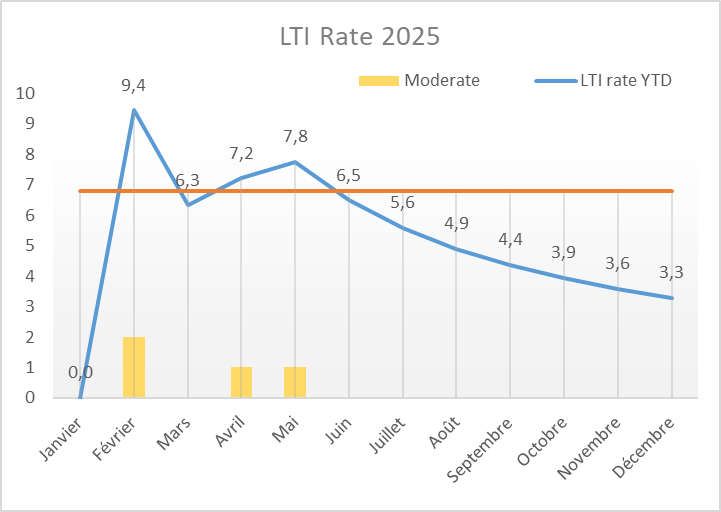
LTI (Lost Time Incident) Rate
The purpose of measuring LTI is to reflect the impact of work accidents on our activities. Calculating a rate helps in understanding the frequency with which these accidents occur. The lower the rate, the safer the working environment. Our target for this year is a rate of 6.8.
Topic of the Month
May : the topic of the month was Cut hazard ๐๏ธโ๏ธ๐ผ
The topic of this month in June is : Manual handling.
Manual handling refers to all activities involving manually pulling, pushing, lifting, or carrying loads, with or without the need for human movement.
Repeated or inappropriate manual handling can cause various risks: bruises, wounds, fractures, back pain, and muscle tears.
Coming up:
- July: H&S training
- August: Evacuation procedure
- September: Onboarding
- October: Chemical spills
- November: Loading / Unloading
- December: Fire/explosion hazards