


Understanding the Power of Art
I recently attended an event called ‘Neuroscience and Art’ by Seed Talks, which explored the intrinsic link between aesthetics and the human brain.
It was hosted by Robyn Landau, a neuroaesthetics researcher, designer and cultural entrepreneur connecting art and science. She is the co-founder and director of Kinda, the leading neuroscience studio and lab translating science insights into creative projects. The talk focused on the neuroscience of how our brain and bodies respond to our environments and the importance of these responses.
When you think of a piece of art that made a real impact on you, do you remember how you felt? Isn’t it strange that an image could trigger such a reaction? Or perhaps you entered a cathedral or other building where the architecture was like nothing experienced before. These reactions are the brain’s response to our aesthetic environment. We are flooded with dopamine, oxytocin and many other neurotransmitters when we behold something we deem beautiful. It all links back to our evolutionary heritage and finding beauty in the natural environment. But if this is the case then why is beauty subjective?
Our environment not only triggers our brains evolutionary hard wiring, but also taps into our memories. This is what makes art subjective, our individual lived experience up to that point and the nostalgia and emotions a certain image can evoke.
The creators of this talk wanted aesthetic experience to be considered as important for health as nutrition, sleep and exercise. But why does this matter? After all, when the government makes cuts, the arts are the first to lose funding. Let us use one example to illustrate. Studies have shown that a beautiful and calming hospital environment improve rates of healing. Maggie’s cancer centres are a perfect exemplification of this theory (Maggie's | Everyone's home of cancer care).
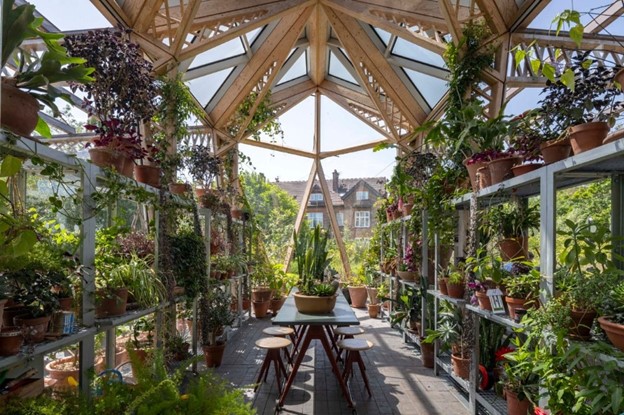
The architecture of their centers echoes back to nature and safety, quite a contrast to the hospital experience of the average cancer patient. Another wonderful example is a charity Colart closely works with, Hospital Rooms, who improve the depressing interiors of mental health wards with bright and lively murals and art.
In essence, people’s wellbeing, health and mind set are improved in environments that capture nature, beauty and peace as opposed to purely utilitarian spaces, which only serve a function. Kinda, the lab hosting this talk, want to push for positive visual environment as essential, and not an additional perk when time and resources allow. If the aesthetic experience could be considered in every stage of every design process, Kinda Labs believe public health would improve.
Overall, I think it’s important for us at Colart to remember that our products bring joy in so many ways, through the creative process and the visual experience. It is also interesting to view our products as a cultural need and a tool in the wellbeing and mental and physical health of the general public.
Matilda Lamberts
Regulatory Affairs Team
Love this Matilda! So eloquently written ❤️
Such a great read, Matilda! Thanks for sharing. It would be helpful to know if there’s any research available that shows ‘arts and art materials’ as essential rather than beneficial. That would make a very powerful case.”
Thank you Matilda for sharing your learnings and opinion after attending this very interesting event. Really cool to read and a good reminder of all the things that go on in the subconscious of our beings. And yes, I totally agree that art improves the well-being of people in their surroundings. Let’s find more opportunities for us to make a difference there!
I recently visited ‘no comment’ at the south bank centre, which is a curation of art produced in a criminal justice setting. It was both beautiful and heart-breaking, but what’s clear is how much art is helping and providing healing. It can’t change anyone’s situation, but it is starting to change some of the stories – or rather these individuals are finding a way to change their own stories through art. It was a great reminder of the power and importance of art, in any setting.