


Winsor & Newton Archive: Ink Stick
Who doesn’t love a good mystery? These lightweight and delicate, yet sturdy, shapes look like small black lacquer sculptural objects - but these are Chinese ink sticks! It is hard to imagine that such beautiful objects are meant to be ground down until they disappear, but it’s true.
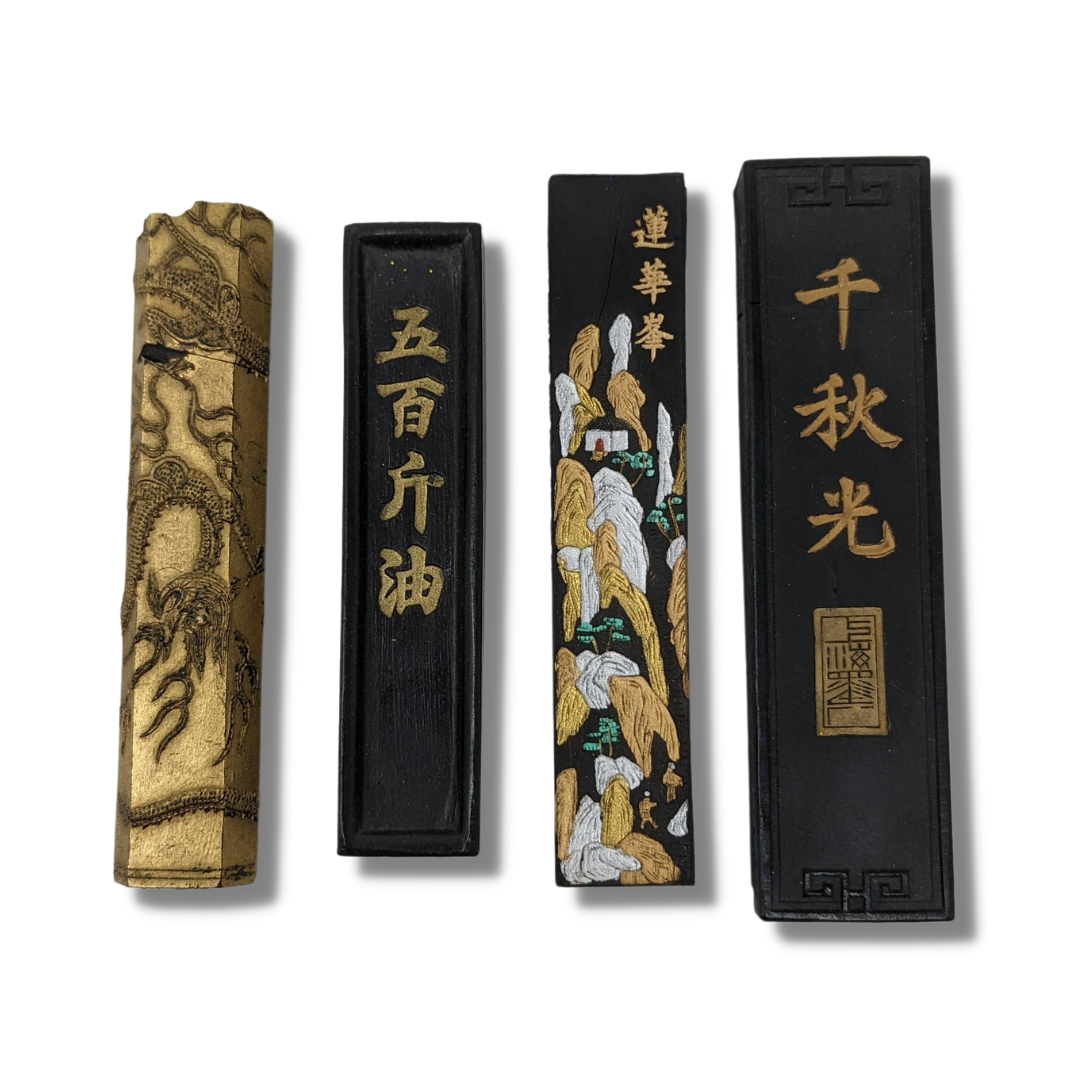
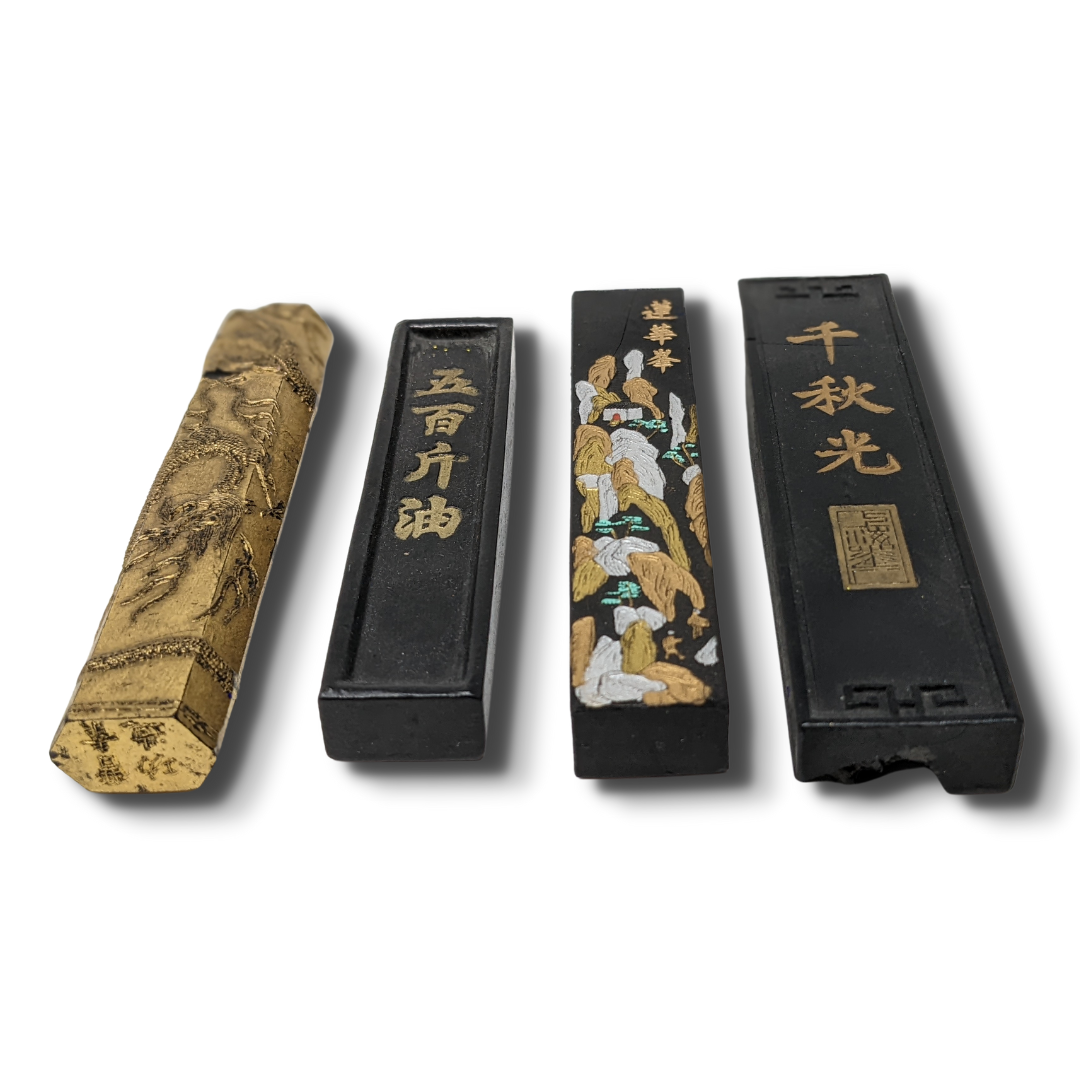
Earliest artifacts show that Chinese inks have been used by people from the 12th Century BC but since this ink was likely a mixture of minerals/soot and water, the vials only have evaporated traces of the ink that existed. Then ink began to be produced in sticks like this in about 250 BC, and archaeologists were able to examine them in this solid form.
Sticks like these are made from soot and animal binder (such as egg white or fish skin) at their most basic elements, the sticks would have had a dough like consistency during production and the ink makers would knead them into shape. Over time, these shapes were pressed into molds to create ornately designed sticks and then, as we can see here, the exterior was often painted to emphasize the relief sculpture on the surface, or lettering was added. Eventually incense and medicinal botanicals were included in the recipe, these acted not only to improve the pleasure of using the sticks with lovely scents, but the herbs have a preservative quality as well.
To use them, an artist or calligrapher would grind the stick onto a stone and add water to the powder that results, using a brush to work with the now liquid ink. A good quality inkstick will be hard and dark black, it will also be smooth and easy to grind when you are ready to use it. If the soot ingredient is coarsely ground, then the stick will sound scratchy when you grind it on the stone, and it won’t have a smooth feel in your hand. Poorly crafted sticks will also warp and crack as they dry, resulting in less attractive looking sticks.
‘Four Treasures of the Study’ is an expression from classical Chinese literary culture, it refers to four materials used by artists: brush, ink, stone and paper. The sticks we have are definitely a treasure - another example from the archive of how beautiful a raw artist’s material can be.
Ink sticks are still made, sold and used nowadays in China and Japan for caligraphy.
In a way, our watercolour pans and watercolour sticks are their successors, since they can be used the same way, scrubbing them into an ink stone with a little water to produce the ink you then paint with.
Cheers,